
The Best Fluffy Pancakes recipe you will fall in love with. Full of tips and tricks to help you make the best pancakes.


Lucas and I were standing in my kitchen last Sunday afternoon, surrounded by the remnants of a large family dinner. We had a couple of roasted chicken carcasses sitting on the counter, and Lucas looked at them with a glint in his eye. He told me that throwing those bones away would be a culinary sin.

I agreed completely. We decided to spend the afternoon making a massive pot of Homemade Chicken Stock. There is something deeply satisfying about watching a pot of water transform into liquid gold.
As the aroma filled the house, we talked about how this simple process connects us to generations of cooks who knew the value of every single ingredient. This Homemade Chicken Stock recipe represents everything we believe in at Hungerix.com. It is about patience, curiosity, and the joy of creating something fundamental from scratch.
You do not need fancy equipment to master Homemade Chicken Stock. You only need a bit of time and a few humble ingredients. By the time the sun started to set, we had jars of rich, shimmering liquid lining the counter. This Homemade Chicken Stock is far superior to anything you can buy in a store, and we are thrilled to share our process with you.
Why You Will Love This Homemade Chicken Stock
You will absolutely love this Homemade Chicken Stock because it puts you in complete control of your kitchen. Most store-bought versions contain excessive sodium and mysterious preservatives. When you make Homemade Chicken Stock, you decide exactly how much salt goes into the pot.
You also control the depth of flavor by choosing your favorite herbs and vegetables. This Homemade Chicken Stock provides a rich mouthfeel that boxed broth simply cannot replicate. The natural gelatin from the bones creates a velvety texture that elevates every soup or sauce you make.
Furthermore, making Homemade Chicken Stock is incredibly cost-effective. You are essentially turning kitchen scraps into a high-quality ingredient. Lucas always says that a good Homemade Chicken Stock is the secret weapon of every home cook.
It transforms a simple weeknight meal into a gourmet experience. Additionally, the process is incredibly therapeutic. Simmering Homemade Chicken Stock fills your home with a comforting scent that makes everything feel a bit cozier. Once you taste the difference, you will never want to go back to the supermarket shelf again.
Ingredients You Will Need
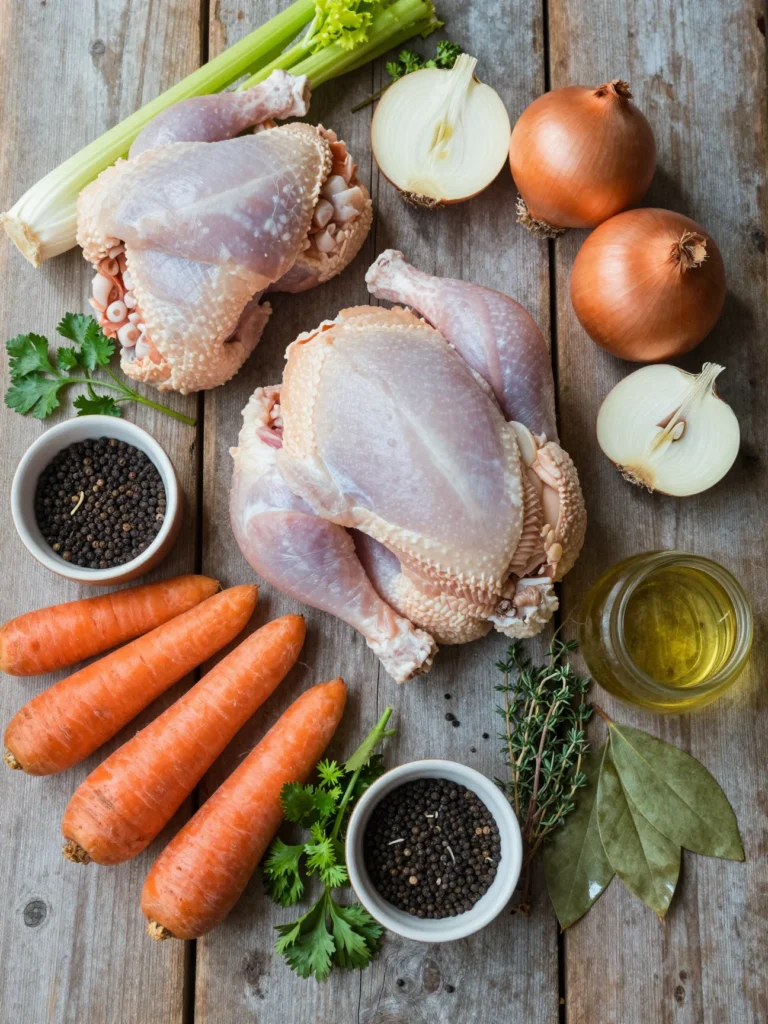
To create the perfect Homemade Chicken Stock, you need fresh, high-quality ingredients. We recommend using a mix of bones for the best results. Lucas likes to include some chicken feet or wings because they add extra collagen.
This makes the Homemade Chicken Stock richer and more nutritious. Here is what we used for our latest batch.
| Ingredient | Quantity | Notes |
|---|---|---|
| Chicken Carcasses | 2 to 3 lbs | Use raw bones or remains from a roast chicken. |
| Large Onions | 2 units | Quartered, leave the skins on for a deeper color. |
| Carrots | 3 large | Roughly chopped into large chunks. |
| Celery Stalks | 3 stalks | Include the leaves for extra flavor. |
| Garlic | 1 head | Halved crosswise to expose the cloves. |
| Fresh Parsley | 1 large bunch | Flat-leaf or curly both work well. |
| Fresh Thyme | 5 to 6 sprigs | Adds a classic earthy aroma. |
| Bay Leaves | 3 units | Dried leaves are perfectly fine. |
| Black Peppercorns | 1 tablespoon | Whole peppercorns provide a subtle heat. |
| Cold Water | 4 to 6 quarts | Always start with cold water for clarity. |
| Apple Cider Vinegar | 1 tablespoon | Helps extract minerals from the bones. |
Substitutions & Variations
Cooking is all about experimentation, and Homemade Chicken Stock is very forgiving. If you do not have chicken bones, you can easily adapt this recipe. You might try using turkey bones after a holiday meal to create a rich Homemade Turkey Stock.
Some people prefer a darker Homemade Chicken Stock. To achieve this, roast your bones and vegetables in the oven at 400 degrees Fahrenheit for 30 minutes before adding them to the water. This adds a deep, caramelized flavor profile.
If you want a more Asian-inspired Homemade Chicken Stock, swap the thyme and parsley for ginger slices and scallions. You can also add a few dried shiitake mushrooms for an intense umami boost. For those who enjoy a bit of sweetness, add a parsnip to the vegetable mix.
However, avoid using brassicas like broccoli or cabbage. These vegetables can make your Homemade Chicken Stock taste bitter and sulfurous. If you are short on time, you can use a pressure cooker.
While the traditional stovetop method is our favorite, a pressure cooker produces a decent Homemade Chicken Stock in a fraction of the time. Always remember that your Homemade Chicken Stock reflects your personal taste, so do not be afraid to tweak the aromatics.
Cooking is all about experimentation, and Homemade Chicken Stock is very forgiving. If you’re looking for another delicious soup recipe, check out Roasted Garlic Soup for a comforting twist.
Step-by-Step Instructions
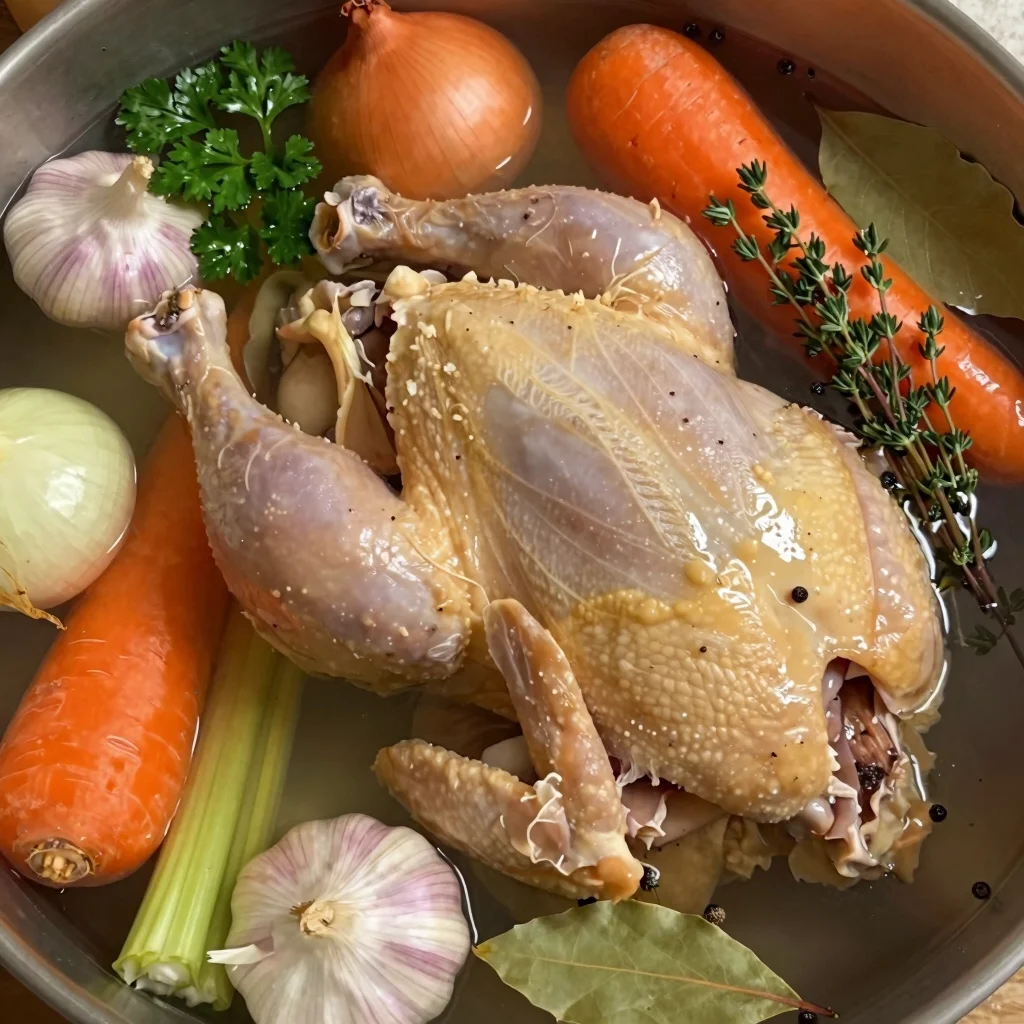
First, place your chicken bones into a very large stockpot. Lucas and I prefer a 12-quart pot to ensure we have plenty of room for all the ingredients. Add the quartered onions, carrots, and celery stalks to the pot.
Do not worry about peeling the onions or carrots, as the skins provide extra nutrients and a beautiful golden hue to the Homemade Chicken Stock. Next, add the halved garlic head, parsley, thyme, bay leaves, and black peppercorns. Pour in the cold water until it covers all the ingredients by at least two inches.
Add the tablespoon of apple cider vinegar and let it sit for about ten minutes. This short rest helps the vinegar begin its work on the bones.
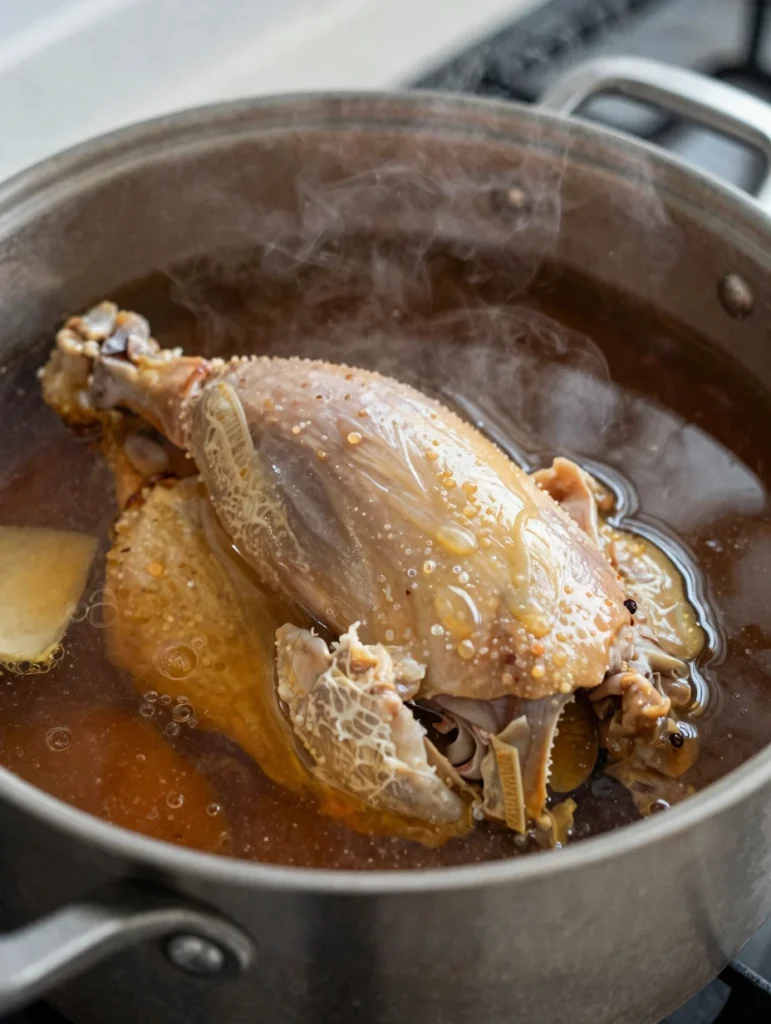
Place the pot on the stove over medium-high heat. Bring the liquid to a very gentle boil. As the water heats up, you will notice grayish foam rising to the surface.
Use a large spoon or a fine-mesh skimmer to remove this foam. This step is crucial if you want a clear Homemade Chicken Stock. Once the liquid reaches a boil, immediately reduce the heat to the lowest setting.
You want a very slow simmer, with only a few bubbles breaking the surface every few seconds. If the water boils too vigorously, the fat will emulsify into the liquid, resulting in a cloudy Homemade Chicken Stock.
Cover the pot partially with a lid. Allow the Homemade Chicken Stock to simmer for at least 6 to 8 hours. Lucas often lets his simmer for up to 12 hours for maximum flavor extraction.
Throughout the process, check the water level occasionally. If the liquid drops below the bones, add a bit more hot water to keep them submerged. After the long simmer, turn off the heat and let the pot cool slightly.
Use a slotted spoon to remove the large bones and vegetable chunks. Discard these solids, as they have given all their flavor to the Homemade Chicken Stock.
Prepare a second large pot or a heat-safe bowl. Place a fine-mesh strainer over it. For an even clearer Homemade Chicken Stock, line the strainer with a layer of cheesecloth.
Carefully pour the liquid through the strainer. This removes the smaller bits of herbs and peppercorns. You are now left with beautiful, aromatic Homemade Chicken Stock.
Allow the stock to cool to room temperature before moving it to the refrigerator. Once chilled, a layer of fat will solidify on the top. You can easily scrape this fat off and discard it, or keep it for sautéing vegetables later. Your Homemade Chicken Stock is now ready for use or storage.
Pro Tips for Success
To achieve the best Homemade Chicken Stock, always start with cold water. Cold water allows the proteins to dissolve slowly, which keeps the liquid clear. If you start with hot water, the proteins lock up quickly and create a cloudy appearance.
Another pro tip involves the simmer. Never let your Homemade Chicken Stock reach a rolling boil after the initial heat-up. High heat breaks down the ingredients too aggressively.
Patience is your best friend when making Homemade Chicken Stock. Additionally, do not add salt at the beginning of the process. As the liquid reduces, the salt concentration increases.
It is much better to salt your final dish than to over-salt the Homemade Chicken Stock itself. Lucas also suggests using a mix of cooked and raw bones. This combination provides both deep roasted notes and fresh, clean flavors.
If you find your Homemade Chicken Stock lacks depth, you can add a tablespoon of tomato paste during the last hour of simmering. This adds a subtle richness without making the stock taste like tomatoes. Finally, always strain your Homemade Chicken Stock twice if you plan to use it for a clear consommé. These small details make a massive difference in the final product.
To achieve the best Homemade Chicken Stock, always start with cold water. For a refreshing take on a classic, try Chicken Noodle Soup for Summer that pairs perfectly with your stock.
Storage & Reheating Tips
Proper storage ensures your Homemade Chicken Stock stays fresh and delicious. You can keep the Homemade Chicken Stock in the refrigerator for up to 4 to 5 days. We recommend using glass jars with tight-fitting lids for the best flavor preservation.
If you do not plan to use all the Homemade Chicken Stock within a few days, the freezer is your best option. Homemade Chicken Stock freezes beautifully for up to 6 months. Lucas likes to freeze his in various sizes.
We use large freezer bags for soup portions and ice cube trays for smaller amounts. These frozen cubes of Homemade Chicken Stock are perfect for deglazing a pan or adding a splash of flavor to a risotto. When you are ready to use frozen stock, thaw it in the refrigerator overnight.
Alternatively, you can place the frozen block directly into a pot over low heat. To reheat refrigerated Homemade Chicken Stock, simply bring it to a simmer on the stovetop. Avoid using the microwave if you want to maintain the best texture.
Always check the clarity and scent of the Homemade Chicken Stock before using it. If it smells sour or looks unusually cloudy after reheating, discard it and start a fresh batch.
What to Serve With This Homemade Chicken Stock
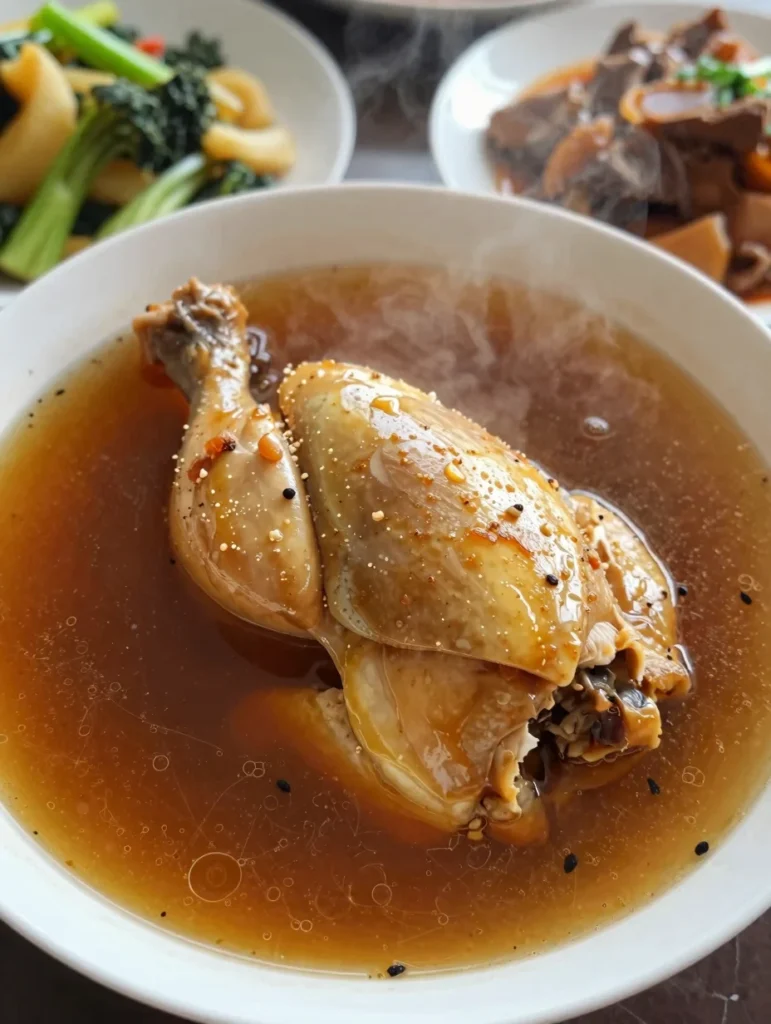
Homemade Chicken Stock is the most versatile ingredient in your pantry. You can use it as a base for a classic Chicken Noodle Soup, which tastes infinitely better with Homemade Chicken Stock. It also serves as the perfect liquid for cooking grains like quinoa, rice, or farro.
Instead of using plain water, use your Homemade Chicken Stock to infuse the grains with savory goodness. Lucas loves using this Homemade Chicken Stock to make a rich mushroom risotto. The stock adds a layer of complexity that water simply cannot provide.
You can also use it to make a simple pan sauce for roasted meats. After cooking a chicken breast, deglaze the pan with a splash of Homemade Chicken Stock and a bit of butter. This creates a restaurant-quality sauce in minutes.
Furthermore, Homemade Chicken Stock is an excellent poaching liquid for fish or vegetables. On a cold day, I often just heat up a mug of Homemade Chicken Stock with a pinch of sea salt and drink it plain. It is incredibly soothing and nourishing. Whether you are making a hearty stew or a delicate gravy, this Homemade Chicken Stock will be your most important ingredient.
Homemade Chicken Stock is the most versatile ingredient in your pantry. Use it as a base for French Onion Soup to enhance the flavors and create a comforting dish.
Nutrition Information (per serving)
Homemade Chicken Stock is naturally low in calories but high in essential minerals and amino acids. It is a fantastic addition to a healthy diet. The following values are estimates for a one-cup serving of Homemade Chicken Stock. Note that removing the fat layer will significantly reduce the fat and calorie content.
| Nutrient | Amount per 1 Cup |
|---|---|
| Calories | 40 kcal |
| Total Fat | 1.5 g |
| Saturated Fat | 0.5 g |
| Cholesterol | 5 mg |
| Sodium | 150 mg (variable) |
| Total Carbohydrates | 1 g |
| Protein | 6 g |
| Calcium | 2% DV |
| Iron | 2% DV |
FAQs
How long can I store Homemade Chicken Stock in the freezer?
You can safely store Homemade Chicken Stock in the freezer for up to 6 months. For the best quality, use airtight containers or heavy-duty freezer bags. Make sure to leave some headspace in the containers, as the Homemade Chicken Stock will expand as it freezes.
Label each container with the date so you can keep track of your supply. While it remains safe to eat after 6 months, the flavor may start to diminish slightly due to freezer burn.
Why did my Homemade Chicken Stock turn into jelly when it cooled?
If your Homemade Chicken Stock turns into a jelly-like substance in the fridge, congratulations! This means you have a high-quality Homemade Chicken Stock rich in gelatin. Gelatin comes from the collagen in the chicken bones and connective tissue.
This thick texture is the sign of a successful simmer. Once you heat the Homemade Chicken Stock up, it will turn back into a liquid state. This gelatin provides a wonderful mouthfeel and body to your finished dishes.
Can I make Homemade Chicken Stock in a slow cooker?
Yes, you can absolutely make Homemade Chicken Stock in a slow cooker. Simply add all your ingredients to the slow cooker and cover them with water. Set the cooker to the low setting and let it run for 10 to 12 hours.
The slow cooker is a great hands-off method for making Homemade Chicken Stock. However, it may not produce a stock as clear as the stovetop method because you cannot easily skim the foam during the initial heating phase.
Why is my Homemade Chicken Stock cloudy?
Cloudy Homemade Chicken Stock usually results from boiling the liquid too hard. High heat causes the fat and impurities to emulsify into the water. To prevent this, always keep your Homemade Chicken Stock at a very low simmer.
Another reason for cloudiness is not skimming the foam at the beginning. Additionally, stirring the pot too much can break down the vegetables and bones, releasing small particles that cloud the liquid. Always handle your Homemade Chicken Stock gently.
Do I have to roast the bones before making Homemade Chicken Stock?
You do not have to roast the bones, but it depends on the flavor you want. Using raw bones results in a lighter, cleaner-tasting Homemade Chicken Stock often called “white stock.” Roasting the bones first creates a “brown stock,” which has a much deeper, richer, and more intense flavor. Both versions of Homemade Chicken Stock are delicious and have their uses in various recipes. Lucas and I often use a mix of both to get the best of both worlds.
Homemade Chicken Stock
Homemade Chicken Stock is a rich, flavorful base for soups, sauces, and various dishes, made from chicken bones and aromatic vegetables. It is a cost-effective way to utilize kitchen scraps and create a nutritious ingredient from scratch.
Ingredients
Method
- Place chicken bones in a large stockpot.
- Add quartered onions, carrots, and celery stalks.
- Add halved garlic, parsley, thyme, bay leaves, and black peppercorns.
- Pour in cold water until ingredients are covered by at least two inches.
- Add apple cider vinegar and let sit for 10 minutes.
- Bring to a gentle boil over medium-high heat, skimming foam.
- Reduce heat to low and simmer for 6 to 12 hours.
- Check water level and add hot water if needed.
- Remove bones and vegetables with a slotted spoon.
- Strain the liquid through a fine-mesh strainer.
- Cool to room temperature and refrigerate.
Notes
Start with cold water for clarity. Do not add salt at the beginning. Use a mix of cooked and raw bones for depth of flavor. Strain twice for a clear stock.