The Best Fluffy Pancakes recipe you will fall in love with. Full of tips and tricks to help you make the best pancakes.


Last Tuesday, my neighbor Lucas and I sat on my back porch. We watched the sunset over the neighborhood. Lucas, who is sixty-five, always brings a unique curiosity to our kitchen sessions at Hungerix.
Affiliate Disclosure: As an Amazon Associate, we earn from qualifying purchases.
He looked at me and suggested we try something different for dinner. We usually stick to hearty stews or classic roasts. However, the warm evening air called for something lighter and more vibrant.
We decided to create a Mediterranean Pizza from scratch. We gathered fresh ingredients from our local market. The scent of fresh basil and salty olives filled the air.
Lucas laughed as he tried to toss the dough. I caught it before it hit the floor. We spent the evening experimenting with different toppings.
This Mediterranean Pizza became an instant favorite for both of us. It captures the essence of sun-drenched coastal flavors. Every bite reminds us of our shared passion for simple, honest food.
This Mediterranean Pizza represents the joy of cooking with a friend. We hope you feel that same spark when you pull your first tray out of the oven.
Why You’ll Love This Mediterranean Pizza Recipe
You will absolutely adore this Mediterranean Pizza because it offers a perfect balance of textures and flavors. Many pizzas rely heavily on greasy meats and heavy cheeses. In contrast, this Mediterranean Pizza uses fresh vegetables and tangy feta.
The combination creates a meal that feels indulgent yet refreshing. You will love how the salty Kalamata olives play against the sweetness of roasted red peppers. Furthermore, the crust remains crisp under the weight of these high-quality ingredients.
Lucas and I believe that a great Mediterranean Pizza should celebrate the garden. You can prepare this recipe in under an hour. It serves as a fantastic weeknight meal or a centerpiece for a weekend gathering.
The bright colors make it a visual masterpiece on any dining table. Most importantly, this Mediterranean Pizza allows for endless creativity. You can adjust the toppings to suit your personal preferences easily.
If you enjoy bright, bold, and zesty notes, this Mediterranean Pizza will become a staple in your kitchen. We designed this recipe to be approachable for any skill level. You do not need a professional pizza oven to achieve great results. Your standard kitchen oven will work perfectly for this Mediterranean Pizza.
Ingredients You’ll Need
Before you start, gather all your components. Quality matters here. We recommend using the freshest produce available to make your Mediterranean Pizza shine.
Use high-quality olive oil for the best mouthfeel. Lucas insists on using sundried tomatoes packed in oil for extra richness. Here is everything you need for the perfect Mediterranean Pizza.
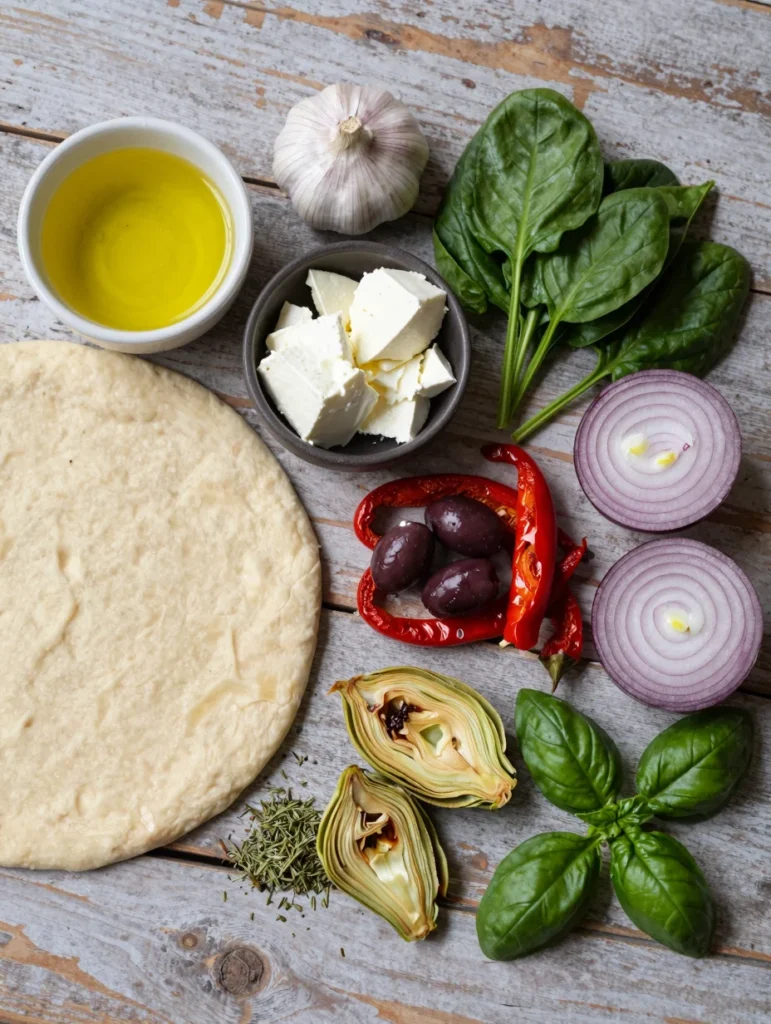
| Ingredient | Amount | Notes |
|---|---|---|
| Pizza Dough | 1 lb (450g) | Store-bought or homemade |
| Olive Oil | 2 tbsp | Extra virgin preferred |
| Minced Garlic | 3 cloves | Freshly minced for best flavor |
| Mozzarella Cheese | 1.5 cups | Shredded |
| Feta Cheese | 1/2 cup | Crumbled |
| Spinach | 1 cup | Fresh baby spinach |
| Kalamata Olives | 1/4 cup | Pitted and sliced |
| Roasted Red Peppers | 1/2 cup | Sliced into strips |
| Red Onion | 1/4 cup | Thinly sliced |
| Artichoke Hearts | 1/2 cup | Canned or jarred, chopped |
| Dried Oregano | 1 tsp | For seasoning |
| Fresh Basil | Handful | For garnish |
Substitutions & Variations
We encourage experimentation at Hungerix. If you want to change your Mediterranean Pizza, go for it. You can swap the standard dough for a whole wheat crust to add more fiber.
If you follow a gluten-free diet, use your favorite gluten-free pizza base. For the cheese, try goat cheese instead of feta. Goat cheese adds a creamy texture that pairs beautifully with the vegetables.
You can also add protein to your Mediterranean Pizza. Grilled chicken or shrimp work wonderfully. Lucas sometimes likes to add a few anchovies for a salty punch.
If you want a bit of heat, sprinkle red pepper flakes over the Mediterranean Pizza before baking. You can also substitute the olive oil base with a thin layer of hummus or pesto. These variations transform the flavor profile entirely.
Do you dislike olives? Simply leave them off. Do you love mushrooms?
Add some thinly sliced cremini mushrooms. The Mediterranean Pizza acts as a canvas for your culinary desires. Always remember to pat dry any wet ingredients like artichokes or peppers. This prevents the crust of your Mediterranean Pizza from becoming soggy.
If you’re looking to customize your Mediterranean Pizza, consider trying our Herb Garden Pizza. This variation allows for creative toppings and a different crust option that can enhance your pizza experience.
Step-by-Step Instructions
- Preheat your oven to 475°F (245°C). If you have a pizza stone, place it in the oven while it heats. This ensures a crisp bottom for your Mediterranean Pizza.
- Place your pizza dough on a lightly floured surface. Roll or stretch the dough into a 12-inch circle. Lucas prefers a rustic, uneven shape, so do not worry about perfection.
- Transfer the dough to a piece of parchment paper or a floured pizza peel. This makes moving the Mediterranean Pizza much easier later.
- Mix the olive oil and minced garlic in a small bowl. Brush this mixture evenly over the surface of the dough. Leave a small border for the crust.
- Spread the shredded mozzarella cheese across the dough. This acts as the “glue” for your Mediterranean Pizza toppings.
- Layer the baby spinach over the cheese. It looks like a lot, but spinach shrinks significantly in the oven.
- Distribute the roasted red peppers, red onions, artichoke hearts, and Kalamata olives evenly. Ensure every slice of your Mediterranean Pizza gets a bit of everything.
- Sprinkle the crumbled feta cheese over the top of the vegetables. The feta adds a wonderful saltiness.
- Dust the entire Mediterranean Pizza with dried oregano. This provides that classic herb aroma.
- Carefully slide the Mediterranean Pizza onto the preheated pizza stone or a baking sheet.
- Bake for 10 to 12 minutes. The crust should look golden brown, and the cheese should bubble.
- Remove the Mediterranean Pizza from the oven. Let it rest for two minutes. This allows the cheese to set slightly.
- Top with fresh basil leaves before slicing. Serve your Mediterranean Pizza while it stays hot and fresh.
Pro Tips for Success
Achieving the perfect Mediterranean Pizza requires attention to detail. First, always let your dough reach room temperature before stretching. Cold dough snaps back and resists shaping.
Lucas and I find that thirty minutes on the counter makes a world of difference. Second, do not overload the Mediterranean Pizza with too many wet toppings. Drain your artichokes and roasted peppers thoroughly on paper towels.
Excess moisture leads to a floppy crust. Third, use a very hot oven. High heat creates those beautiful charred bubbles on the crust of the Mediterranean Pizza.
If you want an extra golden crust, brush the edges with a little more olive oil before baking. Fourth, consider the order of your toppings. We put the spinach under the other vegetables.
This protects the delicate leaves from burning too quickly. Finally, always use fresh garlic. Jarred garlic lacks the pungent kick necessary for an authentic Mediterranean Pizza flavor. Following these simple tips ensures your Mediterranean Pizza turns out like a professional pie every single time.
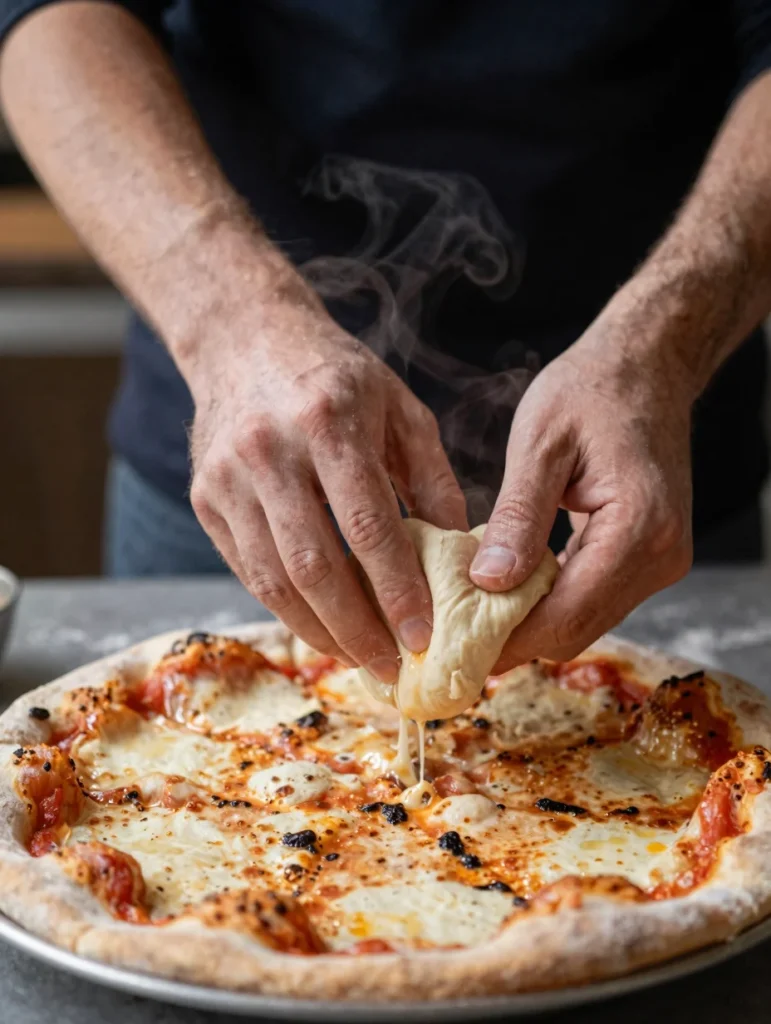
To perfect your Mediterranean Pizza, check out our tips in the Creamy Kale Pasta Salad article. It offers insights on dough preparation and topping management that can elevate your pizza-making skills.
Storage & Reheating Tips
You might have leftovers, though it rarely happens at my house. Store any remaining Mediterranean Pizza in an airtight container in the refrigerator. It stays fresh for up to three days.
We do not recommend freezing the fully cooked Mediterranean Pizza. The fresh vegetables lose their texture upon thawing. When you want to eat your leftovers, avoid the microwave.
The microwave makes the crust chewy and rubbery. Instead, reheat your Mediterranean Pizza in a skillet over medium heat. Cover the pan with a lid for a minute to melt the cheese.
This method restores the crispiness of the bottom crust. Alternatively, place the Mediterranean Pizza slices on a baking sheet in a 350°F (175°C) oven for five to seven minutes. This keeps the Mediterranean Pizza tasting almost as good as it did on day one.
Lucas often eats his leftover Mediterranean Pizza cold for breakfast. He says the flavors meld together beautifully overnight. Whether hot or cold, this Mediterranean Pizza remains a delight.
What to Serve With This Recipe
This Mediterranean Pizza works well as a standalone meal. However, you can elevate the experience with the right sides. A simple Greek salad with cucumbers and tomatoes complements the pizza perfectly.
The acidity of a lemon vinaigrette cuts through the richness of the cheese. You could also serve the Mediterranean Pizza alongside a bowl of roasted tomato soup. For a lighter option, try a side of steamed asparagus or a crisp arugula salad.
Lucas enjoys serving a glass of chilled white wine, like a Sauvignon Blanc, with his Mediterranean Pizza. The citrus notes of the wine pair excellently with the feta and olives. If you want an appetizer, try some roasted garlic hummus with pita bread.
This keeps the theme consistent throughout the meal. For dessert, a light lemon sorbet cleanses the palate after the bold flavors of the Mediterranean Pizza. No matter what you choose, keep the sides simple. You want the Mediterranean Pizza to remain the star of the show.
While enjoying your Mediterranean Pizza, consider pairing it with a refreshing side like our Melon Mint Soup. This light dish complements the pizza beautifully and adds a vibrant touch to your meal.
Nutrition Information (per serving)
This Mediterranean Pizza provides a good amount of vegetables and healthy fats. It is much lighter than a traditional meat lovers pizza. We calculate these values based on an average slice.
Your specific toppings may change these numbers slightly. Enjoy your Mediterranean Pizza as part of a balanced diet.
| Metric | Amount |
|---|---|
| Calories | 285 kcal |
| Total Fat | 12g |
| Saturated Fat | 5g |
| Cholesterol | 22mg |
| Sodium | 640mg |
| Total Carbohydrates | 34g |
| Dietary Fiber | 2g |
| Sugars | 3g |
| Protein | 11g |
FAQs
What toppings go on a Mediterranean Pizza?
A classic Mediterranean Pizza typically features ingredients like feta cheese, Kalamata olives, and spinach. You will also commonly find roasted red peppers, artichoke hearts, and red onions. Some versions include sundried tomatoes and fresh garlic. The key involves using ingredients found in Mediterranean cuisine to create a bright and salty flavor profile.
Is Mediterranean Pizza healthy?
Compared to many other pizza styles, the Mediterranean Pizza is a healthier choice. It focuses on nutrient-dense vegetables and heart-healthy olive oil. It contains less processed meat and saturated fat than traditional pepperoni pizzas.
However, portion control still matters because the cheese and dough contain calories. Choosing a thin crust or whole wheat dough can further improve its nutritional value.
What is the best cheese for Mediterranean Pizza?
Feta is the most iconic cheese for a Mediterranean Pizza because of its tangy and salty flavor. However, most recipes also use mozzarella to provide that classic melty texture. You can also experiment with goat cheese for creaminess or shaved parmesan for extra depth. Avoid overly heavy or smoked cheeses that might overpower the delicate vegetable flavors.
How many calories are in a slice of Mediterranean Pizza?
A standard slice of Mediterranean Pizza usually contains between 250 and 300 calories. This depends on the thickness of the crust and the amount of cheese used. Homemade versions often have fewer calories than restaurant versions because you control the oil and cheese amounts. Adding plenty of vegetables increases the volume of the meal without significantly raising the calorie count.
Can I use store-bought dough for Mediterranean Pizza?
Yes, store-bought dough works excellently for making a Mediterranean Pizza. It saves a lot of time on busy weeknights. You can find high-quality fresh dough in the refrigerated section of most grocery stores. Just ensure you let the dough sit at room temperature for at least thirty minutes before you try to shape it for your Mediterranean Pizza.
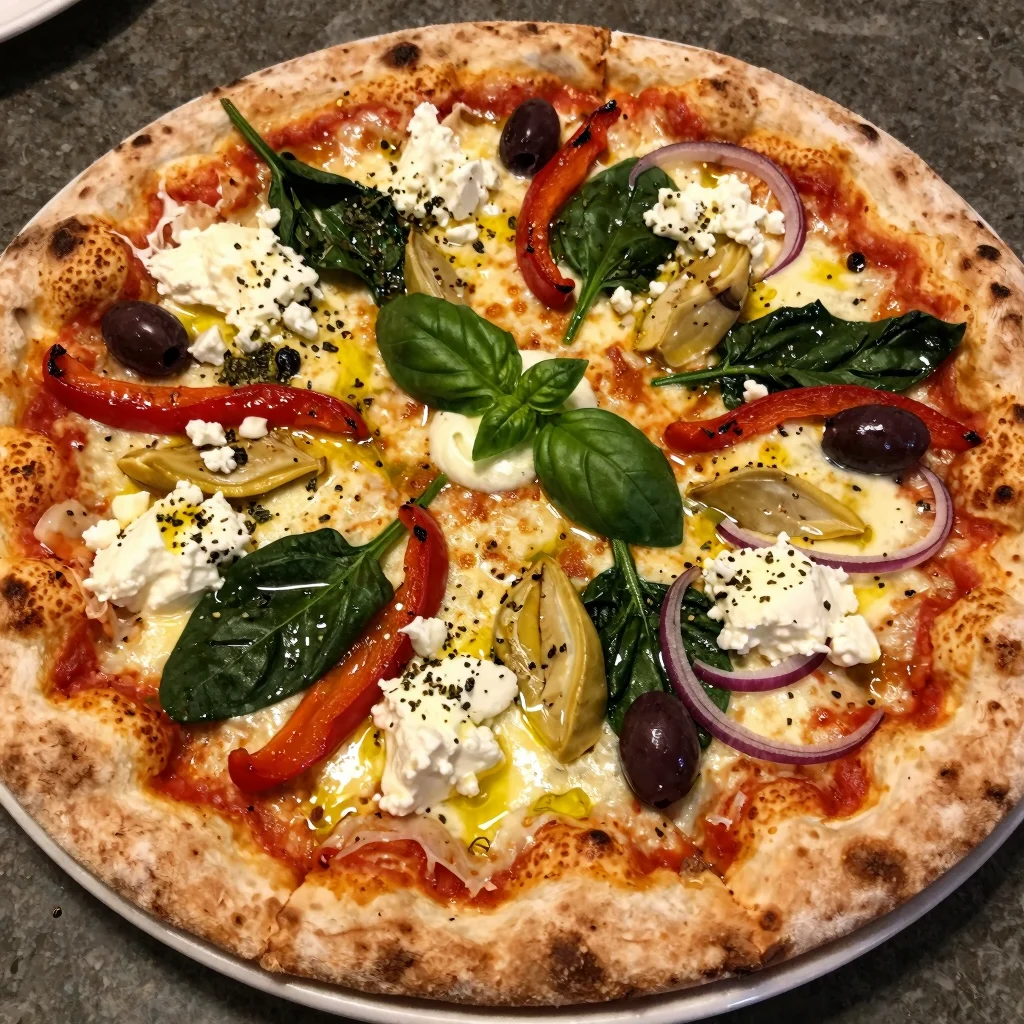
Mediterranean Pizza
This Mediterranean Pizza offers a perfect balance of textures and flavors, featuring fresh vegetables, tangy feta, and a crisp crust. It's a vibrant meal that celebrates garden ingredients and is easy to customize.
Ingredients
Method
- Preheat your oven to 475°F (245°C). If you have a pizza stone, place it in the oven while it heats.
- Place your pizza dough on a lightly floured surface. Roll or stretch the dough into a 12-inch circle.
- Transfer the dough to a piece of parchment paper or a floured pizza peel.
- Mix the olive oil and minced garlic in a small bowl. Brush this mixture evenly over the surface of the dough.
- Spread the shredded mozzarella cheese across the dough.
- Layer the baby spinach over the cheese.
- Distribute the roasted red peppers, red onions, artichoke hearts, and Kalamata olives evenly.
- Sprinkle the crumbled feta cheese over the top.
- Dust the entire pizza with dried oregano.
- Carefully slide the pizza onto the preheated pizza stone or a baking sheet.
- Bake for 10 to 12 minutes until the crust is golden brown and the cheese bubbles.
- Remove from the oven and let it rest for two minutes. Top with fresh basil leaves before slicing.
Notes
Use high-quality ingredients for the best flavor. Experiment with toppings and adjust to your preference. Store leftovers in an airtight container for up to three days.