
The Best Fluffy Pancakes recipe you will fall in love with. Full of tips and tricks to help you make the best pancakes.


Last summer, Lucas and I stood in his backyard staring at an explosion of basil, oregano, and thyme that had completely taken over his herb garden. “We need to do something with all this,” he said, waving his hand over the fragrant chaos. That’s when we decided to make what would become our go-to warm-weather meal: Herb Garden Pizza.
Affiliate Disclosure: As an Amazon Associate, we earn from qualifying purchases.
We grabbed handfuls of fresh herbs, fired up the oven, and topped homemade dough with every green thing we could find. The result was spectacular—crispy, aromatic, and bursting with flavor. Since that day, this Herb Garden Pizza has become our answer to summer abundance. It’s the perfect way to showcase fresh herbs, and honestly, it tastes like edible sunshine.
Why You’ll Love This Herb Garden Pizza
This Herb Garden Pizza celebrates simplicity and freshness. First, it transforms your herb surplus into something extraordinary. Second, the flavors are bright and vibrant without being complicated.
You don’t need fancy ingredients or special techniques. Instead, you let the herbs do the talking.
Furthermore, this recipe is incredibly forgiving. You can use whatever herbs you have growing. Additionally, the dough comes together easily, even if you’ve never made pizza before. Lucas always says this Herb Garden Pizza proves that the best meals come from using what’s right in front of you.
Moreover, it’s versatile enough for any occasion. Serve it as an appetizer, a light dinner, or cut it into small squares for parties. The aroma alone will have everyone gathering around your kitchen.
Ingredients You’ll Need
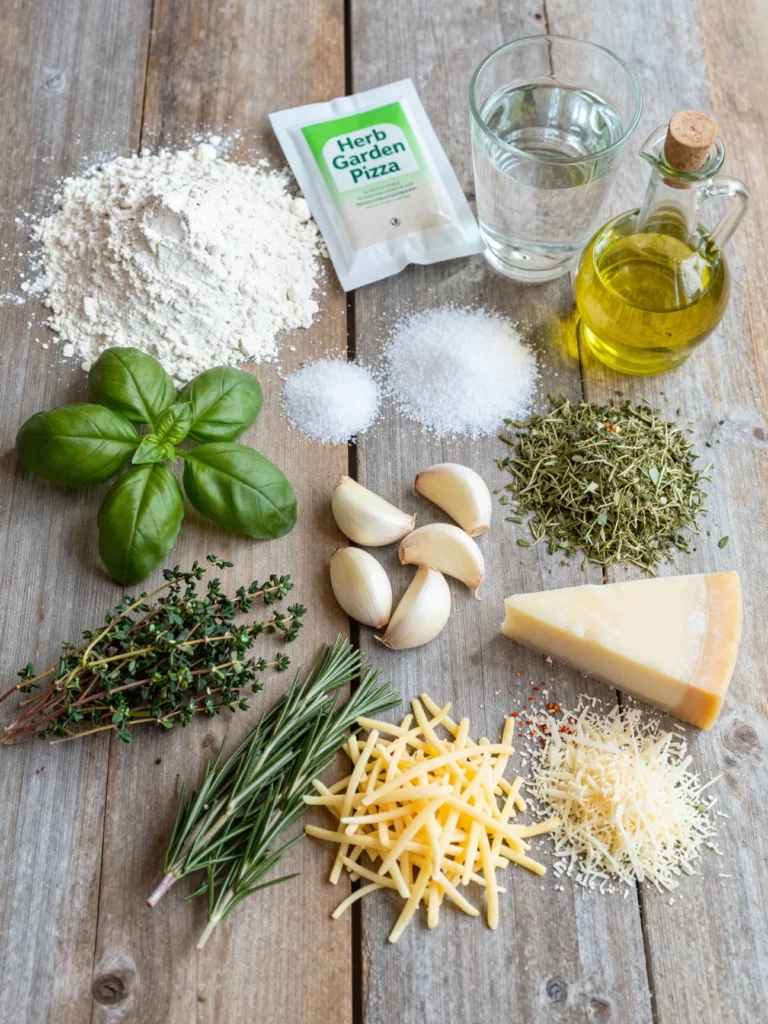
For this Herb Garden Pizza, we keep things straightforward. You’ll need basic pizza dough ingredients and loads of fresh herbs. Here’s what to gather:
| Ingredient | Amount |
|---|---|
| All-purpose flour | 3 cups |
| Active dry yeast | 1 packet (2¼ teaspoons) |
| Warm water | 1 cup |
| Olive oil | 3 tablespoons |
| Salt | 1½ teaspoons |
| Sugar | 1 teaspoon |
| Fresh basil | 1 cup, roughly chopped |
| Fresh oregano | ½ cup, leaves only |
| Fresh thyme | ¼ cup, leaves only |
| Fresh rosemary | 2 tablespoons, minced |
| Garlic cloves | 4, thinly sliced |
| Mozzarella cheese | 2 cups, shredded |
| Parmesan cheese | ½ cup, grated |
| Red pepper flakes | ½ teaspoon (optional) |
The beauty of this Herb Garden Pizza lies in the herb combination. Each one brings something unique to the table. Basil adds sweetness, oregano provides earthiness, thyme contributes subtle complexity, and rosemary delivers pine-like intensity.
Substitutions & Variations
This Herb Garden Pizza adapts beautifully to whatever you have available. If you’re missing certain herbs, no problem. Increase the amounts of others.
Parsley works wonderfully, though it’s milder. Cilantro creates an interesting twist if you enjoy its distinctive flavor.
Can’t make dough from scratch? Use store-bought pizza dough or even naan bread. The herbs still shine through.
For a different cheese profile, try fontina or goat cheese instead of mozzarella. Ricotta dollops add creaminess that contrasts nicely with the herbs.
Want to make your Herb Garden Pizza heartier? Add caramelized onions, sautéed mushrooms, or cherry tomatoes. Lucas sometimes throws on prosciutto after baking for a salty punch. For a white pizza version, skip tomato sauce entirely and brush the dough with garlic-infused olive oil before adding cheese and herbs.
Vegan? Replace the cheese with cashew cream or your favorite plant-based alternative. The herbs still create an incredibly flavorful Herb Garden Pizza without dairy.
Step-by-Step Instructions
Making this Herb Garden Pizza is easier than you think. Let’s walk through it together.
Step 1: Start by activating the yeast. Combine warm water (about 110°F) with sugar in a small bowl. Sprinkle the yeast on top.
Let it sit for 5-10 minutes until foamy. This tells you the yeast is alive and ready.
Step 2: Meanwhile, mix flour and salt in a large bowl. Once the yeast mixture is foamy, add it along with olive oil. Stir everything together until a shaggy dough forms.
Step 3: Turn the dough onto a floured surface. Knead for about 8 minutes until smooth and elastic. Lucas always says this is the therapeutic part. Place the dough in an oiled bowl, cover with a kitchen towel, and let it rise in a warm spot for about an hour.
Step 4: While the dough rises, prepare your herbs. Wash them thoroughly and pat dry. Chop the basil roughly.
Strip oregano and thyme leaves from their stems. Mince the rosemary finely since it’s quite strong. Slice the garlic thinly.
Step 5: Preheat your oven to 475°F. If you have a pizza stone, place it in the oven now. Otherwise, prepare a large baking sheet by brushing it with olive oil.
Step 6: Once the dough has doubled in size, punch it down. Turn it out onto a floured surface and roll or stretch it into your desired shape. We usually make one large rectangular pizza or two smaller rounds.
Step 7: Transfer the dough to your prepared baking sheet or pizza peel if using a stone. Brush the surface with olive oil. This creates a flavorful base for your Herb Garden Pizza.
Step 8: Sprinkle the mozzarella cheese evenly over the dough, leaving a small border for the crust. Add the Parmesan next. Then comes the star of the show—scatter all those beautiful fresh herbs across the surface.
Distribute the garlic slices evenly. If using red pepper flakes, sprinkle them on now.
Step 9: Bake your Herb Garden Pizza for 12-15 minutes. The crust should turn golden brown, the cheese should bubble enthusiastically, and the herbs will become fragrant. The edges might char slightly, which adds wonderful flavor.
Step 10: Remove from the oven and let it rest for 2-3 minutes. This helps the cheese set slightly, making slicing easier. Drizzle with a bit more olive oil if desired. Cut and serve immediately.
Pro Tips for Success

After making countless Herb Garden Pizzas, we’ve learned a few tricks. First, don’t skip the dough rising time. Proper fermentation develops flavor and creates better texture.
If you have extra time, let the dough rise slowly in the refrigerator overnight. This enhances the taste considerably.
Second, use a hot oven. High heat is crucial for crispy crust. Don’t be tempted to lower the temperature. Additionally, if your oven runs cool, bump it up to 500°F.
Third, distribute herbs evenly. You want every bite of your Herb Garden Pizza to include that herb medley. However, don’t pile them too thickly in the center, or they won’t cook properly.
Fourth, watch the rosemary quantity. It’s powerful and can overwhelm other herbs. Use it sparingly until you know your preference. Lucas learned this the hard way when he made “Rosemary Overload Pizza” once—it was memorable for the wrong reasons.
Fifth, add some herbs after baking. Reserve a handful of fresh basil to scatter on top once the pizza comes out. The heat will wilt it slightly while preserving its bright flavor. This layering technique makes your Herb Garden Pizza even more aromatic.
Finally, preheat your baking surface. Whether using a stone or sheet pan, make sure it’s hot before the dough hits it. This prevents soggy bottoms.
Storage & Reheating Tips
Leftover Herb Garden Pizza keeps well, though honestly, it rarely lasts long around here. Store cooled slices in an airtight container in the refrigerator for up to three days.
For reheating, skip the microwave. It makes the crust rubbery. Instead, use your oven or a skillet.
For oven reheating, place slices on a baking sheet at 375°F for about 10 minutes. For skillet reheating, warm a pan over medium heat, add the slice, and cover with a lid. The crust crisps up while the cheese melts again.
You can freeze this Herb Garden Pizza too. Wrap individual slices in plastic wrap, then place them in a freezer bag. They’ll keep for up to two months. Reheat directly from frozen in a 400°F oven for 15-20 minutes.
Interestingly, the herb flavors mellow slightly after a day, creating a different but equally delicious taste profile.
What to Serve With This Recipe

This Herb Garden Pizza works beautifully as a standalone meal, but pairing it with complementary sides elevates the experience. We love serving it with a simple arugula salad dressed with lemon vinaigrette. The peppery greens contrast nicely with the rich, herby pizza.
A tomato and cucumber salad with red onion and balsamic dressing also works wonderfully. The cool, crisp vegetables balance the warm pizza perfectly. Lucas often makes a white bean salad with olive oil and garlic that complements the Mediterranean flavors.
For a heartier spread, add some marinated olives, roasted red peppers, and a good crusty bread with herb butter. If you’re entertaining, start with an antipasto platter before bringing out the Herb Garden Pizza.
Wine-wise, a crisp white like Pinot Grigio or Sauvignon Blanc pairs beautifully. The acidity cuts through the cheese while highlighting the herbs. If you prefer red, go with something light like Chianti.
For casual weeknight dinners, sometimes we just serve this Herb Garden Pizza with cold beer and call it perfect.
FAQs
Can I use dried herbs instead of fresh for Herb Garden Pizza?
You can, but the result will be quite different. Fresh herbs are the soul of this recipe. Dried herbs lack the bright, vibrant flavor that makes this Herb Garden Pizza special.
If you must substitute, use one-third the amount of dried herbs, and add them earlier in the cooking process. However, we strongly recommend waiting until you have fresh herbs available.
What’s the best way to prevent a soggy Herb Garden Pizza crust?
Several factors prevent sogginess. First, preheat your baking surface thoroughly. Second, don’t overload with toppings or moisture-heavy ingredients.
Third, brush the dough with olive oil before adding toppings—this creates a barrier. Fourth, bake at high temperature. Finally, if your herbs are very wet after washing, pat them completely dry before using.
Can I make Herb Garden Pizza dough ahead of time?
Absolutely! Make the dough up to two days in advance. After the first rise, punch it down, wrap it tightly in plastic wrap, and refrigerate.
When ready to use, let it come to room temperature for about 30 minutes before rolling. This cold fermentation actually improves flavor. You can also freeze pizza dough for up to three months.
How do I prevent the herbs from burning on my Herb Garden Pizza?
Delicate herbs can char in a hot oven. To prevent this, tuck some herbs under the cheese where they’re protected. Also, don’t place the oven rack too close to the heating element.
If herbs on top start browning too quickly, tent the pizza loosely with foil for the last few minutes. Adding some fresh herbs after baking also gives you that bright green color.
What other cheeses work well on Herb Garden Pizza?
While mozzarella and Parmesan create a classic combination, many cheeses work beautifully. Fontina melts wonderfully and adds nutty flavor. Goat cheese provides tangy creaminess.
Provolone offers a sharper taste. Gruyère brings sophisticated earthiness. You can also use burrata, adding it after baking for luxurious creaminess. Mix and match based on your preferences—this Herb Garden Pizza is flexible.
Nutrition Information (per serving)
Based on 8 servings:
| Nutrient | Amount |
|---|---|
| Calories | 285 |
| Total Fat | 11g |
| Saturated Fat | 5g |
| Cholesterol | 25mg |
| Sodium | 520mg |
| Total Carbohydrates | 35g |
| Dietary Fiber | 2g |
| Sugars | 1g |
| Protein | 12g |
This Herb Garden Pizza has become one of our most-requested recipes. Friends ask us to make it for gatherings. Neighbors peek over the fence when they smell it baking.
Lucas grows extra herbs now just to keep up with demand. There’s something magical about transforming simple garden herbs into something this delicious. Next time your herb garden explodes with growth, you’ll know exactly what to do.
Make this Herb Garden Pizza, pour yourself something cold, and enjoy the fruits—or rather, herbs—of your labor. It’s honest cooking at its finest, and that’s exactly what we’re all about.

Herb Garden Pizza
Herb Garden Pizza is a vibrant and flavorful dish that showcases fresh herbs, transforming a surplus of garden herbs into a delicious pizza. It's simple to make and perfect for warm weather meals.
Ingredients
Method
- Step 1: Start by activating the yeast. Combine warm water (about 110°F) with sugar in a small bowl. Sprinkle the yeast on top. Let it sit for 5-10 minutes until foamy.
- Step 2: Mix flour and salt in a large bowl. Once the yeast mixture is foamy, add it along with olive oil. Stir until a shaggy dough forms.
- Step 3: Turn the dough onto a floured surface. Knead for about 8 minutes until smooth and elastic. Place the dough in an oiled bowl, cover with a kitchen towel, and let it rise in a warm spot for about an hour.
- Step 4: Prepare your herbs. Wash them thoroughly and pat dry. Chop the basil roughly. Strip oregano and thyme leaves from their stems. Mince the rosemary finely. Slice the garlic thinly.
- Step 5: Preheat your oven to 475°F. If you have a pizza stone, place it in the oven now. Otherwise, prepare a large baking sheet by brushing it with olive oil.
- Step 6: Once the dough has doubled in size, punch it down. Turn it out onto a floured surface and roll or stretch it into your desired shape.
- Step 7: Transfer the dough to your prepared baking sheet or pizza peel if using a stone. Brush the surface with olive oil.
- Step 8: Sprinkle the mozzarella cheese evenly over the dough, leaving a small border for the crust. Add the Parmesan next. Scatter all the fresh herbs across the surface and distribute the garlic slices evenly.
- Step 9: Bake your Herb Garden Pizza for 12-15 minutes until the crust is golden brown and the cheese is bubbly.
- Step 10: Remove from the oven and let it rest for 2-3 minutes. Drizzle with a bit more olive oil if desired. Cut and serve immediately.
Notes
This pizza is versatile; you can use any combination of fresh herbs you have. For a heartier version, consider adding caramelized onions or cherry tomatoes. Leftovers can be stored in an airtight container in the refrigerator for up to three days.