
The Best Fluffy Pancakes recipe you will fall in love with. Full of tips and tricks to help you make the best pancakes.


Last summer, Henry and I found ourselves with a basket full of red bell peppers from his garden. We’d already made stuffed peppers, grilled them, and tossed them in salads. Then Henry mentioned his grandmother used to make this incredible soup with roasted peppers and yogurt.

That conversation sparked our journey into creating this Roasted Pepper Yogurt Soup. The first time we made it together, we couldn’t believe how something so simple could taste so remarkable. The smoky sweetness of roasted peppers combined with tangy yogurt creates magic in a bowl. Now, this Roasted Pepper Yogurt Soup has become our go-to recipe when we want something comforting yet refreshing.
Why You’ll Love This Roasted Pepper Yogurt Soup
This Roasted Pepper Yogurt Soup delivers on so many levels. First, it’s incredibly versatile. You can serve it warm on chilly evenings or chilled during hot summer days.
The flavor profile hits all the right notes—smoky, tangy, slightly sweet, and perfectly seasoned. Henry always says this soup reminds him of Mediterranean vacations without leaving home.
Furthermore, this Roasted Pepper Yogurt Soup comes together quickly. You don’t need fancy equipment or hard-to-find ingredients. Most items sit in your pantry already.
The roasted peppers create depth without requiring hours of simmering. Plus, the yogurt adds protein and creaminess without heavy cream.
Additionally, this recipe works beautifully for various dietary preferences. It’s naturally vegetarian and gluten-free. The soup also impresses guests while remaining budget-friendly.
We’ve served this Roasted Pepper Yogurt Soup at casual dinners and slightly fancier gatherings. Everyone always asks for the recipe.
Ingredients You’ll Need
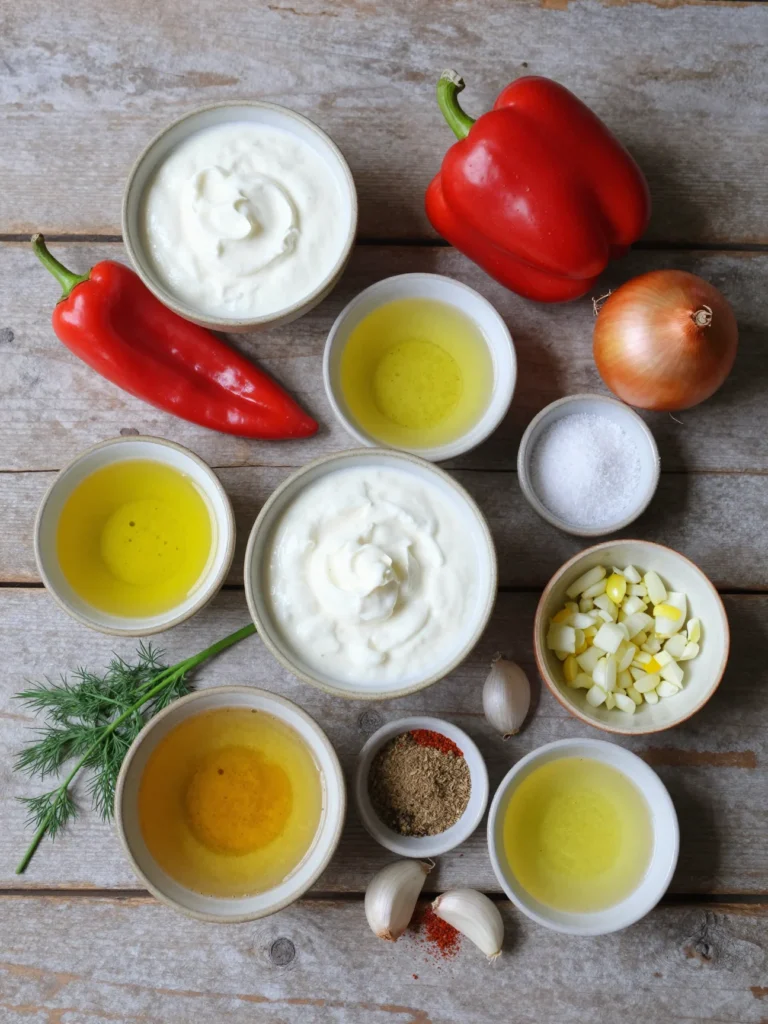
Gathering ingredients for this Roasted Pepper Yogurt Soup takes just minutes. We’ve streamlined everything for maximum flavor with minimal fuss. Here’s what you’ll need:
| Ingredient | Amount |
|---|---|
| Red bell peppers | 4 large |
| Plain Greek yogurt | 1½ cups |
| Vegetable broth | 2 cups |
| Olive oil | 2 tablespoons |
| Yellow onion, chopped | 1 medium |
| Garlic cloves, minced | 3 |
| Ground cumin | 1 teaspoon |
| Smoked paprika | 1 teaspoon |
| Salt | 1 teaspoon (adjust to taste) |
| Black pepper | ½ teaspoon |
| Fresh lemon juice | 2 tablespoons |
| Fresh dill for garnish | Optional |
The quality of your peppers matters significantly. We prefer fresh, firm bell peppers with smooth skin. The Greek yogurt should be full-fat for best results, though low-fat works too. Henry insists on using good olive oil—it makes a difference in this Roasted Pepper Yogurt Soup.
Substitutions & Variations
This Roasted Pepper Yogurt Soup adapts beautifully to what you have available. We’ve experimented with countless variations over the years.
For the peppers, you can mix colors. Orange or yellow bell peppers create a sweeter soup. Henry once used half red and half yellow, creating a gorgeous sunset color.
You can also use jarred roasted peppers in a pinch. Drain them well and skip the roasting step.
Regarding yogurt, regular plain yogurt works fine. However, the soup becomes thinner. Sour cream creates a richer version.
For dairy-free Roasted Pepper Yogurt Soup, try coconut yogurt. It adds subtle sweetness that complements the peppers.
The broth offers flexibility too. Chicken broth adds depth if you’re not strictly vegetarian. We’ve even used water when broth wasn’t available. Just increase seasonings slightly.
Spice-wise, feel free to experiment. Cayenne pepper adds heat. Coriander brings earthiness.
Za’atar creates a Middle Eastern version. Fresh herbs like basil or mint change the profile completely.
Step-by-Step Instructions
Making this Roasted Pepper Yogurt Soup follows a straightforward process. Take your time with roasting—that’s where the magic happens.
Step 1: Roast the Peppers
Preheat your oven to 450°F. Place whole bell peppers on a baking sheet. Roast for 25-30 minutes, turning occasionally, until skins blacken and blister.
Alternatively, char them directly over a gas flame. Transfer roasted peppers to a bowl and cover with plastic wrap. Let them steam for 15 minutes. This step makes peeling effortless.
Step 2: Peel and Prepare Peppers
Once cooled, peel away the charred skin. Don’t worry about getting every bit—some char adds flavor. Remove stems and seeds.
Roughly chop the flesh. The kitchen smells amazing at this point.
Step 3: Sauté Aromatics
Heat olive oil in a large pot over medium heat. Add chopped onion. Cook for 5 minutes until softened and translucent.
Add minced garlic, cumin, and smoked paprika. Stir for one minute until fragrant. This creates the flavor foundation for your Roasted Pepper Yogurt Soup.
Step 4: Combine and Simmer
Add chopped roasted peppers to the pot. Pour in vegetable broth. Bring everything to a gentle simmer.
Cook for 10 minutes, allowing flavors to meld. Season with salt and black pepper.
Step 5: Blend Until Smooth
Remove pot from heat. Use an immersion blender to puree until completely smooth. Alternatively, transfer to a regular blender in batches.
Be careful with hot liquids. Blend until silky and velvety.
Step 6: Add Yogurt
Return soup to low heat. Whisk in Greek yogurt gradually. Stir constantly to prevent curdling.
Add lemon juice. Taste and adjust seasonings. Your Roasted Pepper Yogurt Soup is ready.
Pro Tips for Success
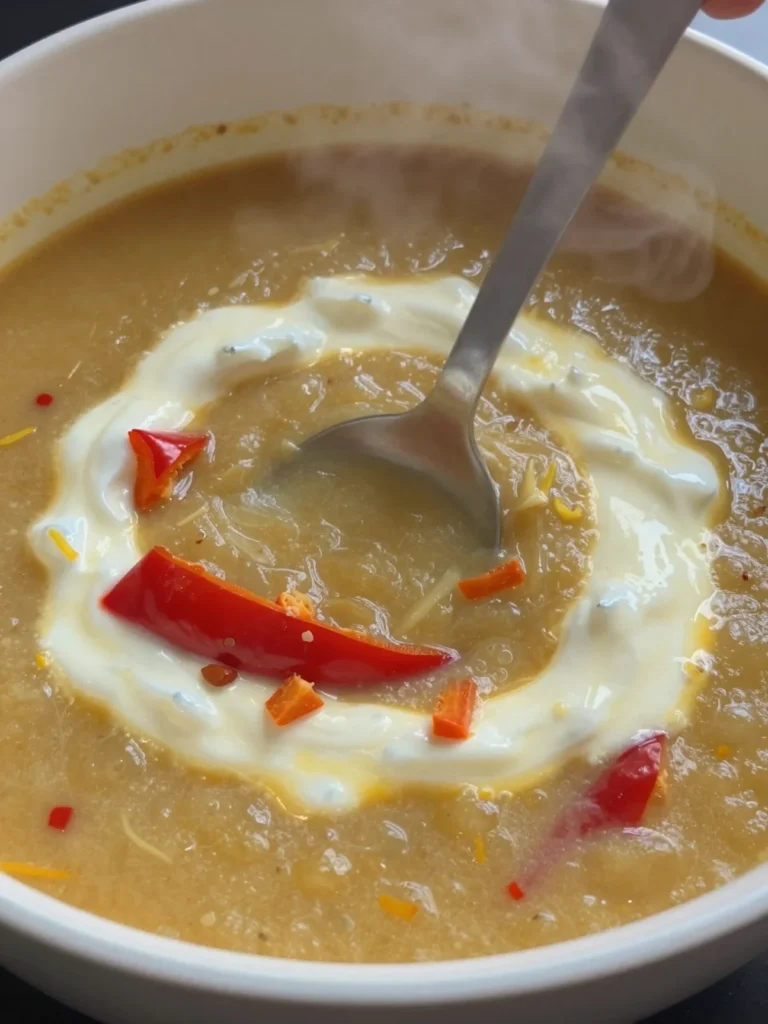
After making this Roasted Pepper Yogurt Soup dozens of times, we’ve learned several tricks. These tips guarantee perfect results every time.
First, roast those peppers well. Deep charring creates smoky depth that defines this soup. Don’t rush this step. Henry always says patience during roasting pays off in flavor.
Second, temper your yogurt before adding it. Mix a few spoonfuls of hot soup into the yogurt first. Then gradually add the tempered yogurt back to the pot. This prevents curdling and keeps your Roasted Pepper Yogurt Soup smooth.
Third, never boil the soup after adding yogurt. Keep heat low. High temperatures cause yogurt to separate. The texture becomes grainy instead of creamy.
Fourth, taste before serving. Lemon juice brightens everything, but you might need more. Sometimes we add a pinch of sugar to balance acidity. Salt levels vary depending on your broth.
Fifth, garnish thoughtfully. Fresh dill, a swirl of olive oil, or toasted pine nuts elevate presentation. We often add a dollop of extra yogurt on top. Croutons provide textural contrast.
Finally, consider the serving temperature. This Roasted Pepper Yogurt Soup tastes fantastic both ways. Cold soup needs more aggressive seasoning. Flavors mute when chilled.
Storage & Reheating Tips
This Roasted Pepper Yogurt Soup stores beautifully, making it perfect for meal prep. We often double the batch specifically for leftovers.
Refrigerate the soup in an airtight container for up to four days. The flavors actually deepen overnight. Henry prefers it the next day. Just give it a good stir before serving, as separation sometimes occurs.
For reheating, use gentle heat. Pour the Roasted Pepper Yogurt Soup into a pot over low temperature. Stir frequently.
Never use high heat, which causes the yogurt to separate. Microwave reheating works in 30-second intervals, stirring between each.
Freezing requires a bit more care. The yogurt can separate upon thawing. However, we’ve successfully frozen this soup.
Freeze it before adding yogurt, then stir in fresh yogurt after reheating. Alternatively, freeze the complete soup and reblend after thawing. It won’t be quite as silky but still tastes delicious.
Frozen Roasted Pepper Yogurt Soup keeps for up to three months. Thaw overnight in the refrigerator before reheating. Quick thawing on the stovetop works too.
What to Serve With This Recipe
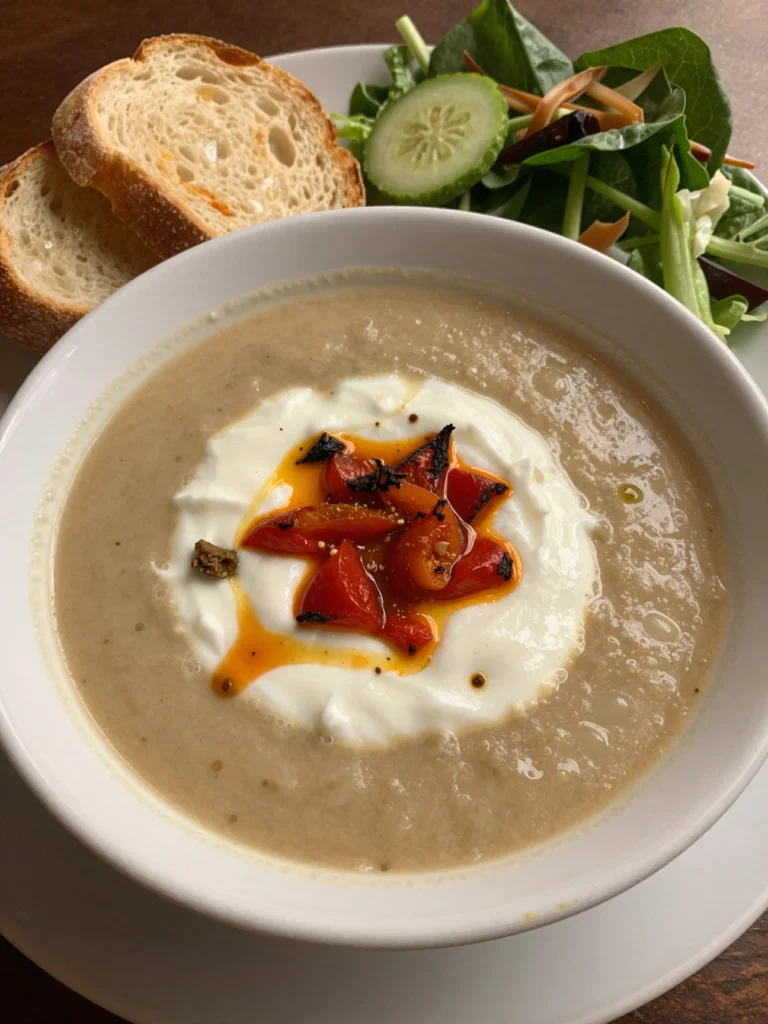
This Roasted Pepper Yogurt Soup pairs wonderfully with many dishes. We’ve tested countless combinations at our table.
Crusty bread is essential. A warm baguette, sourdough, or focaccia works perfectly for dipping. Henry makes garlic bread that complements this soup beautifully. Pita bread or naan also fit the flavor profile.
For a complete meal, add a fresh salad. Simple mixed greens with lemon vinaigrette keep things light. A cucumber tomato salad with feta brings Mediterranean vibes. Quinoa or grain salads add substance.
Grilled cheese sandwiches create a comforting combination. We particularly love adding aged cheddar or gruyere. The richness balances the tangy soup perfectly.
Protein additions work well too. Grilled chicken, shrimp, or lamb kebabs turn this Roasted Pepper Yogurt Soup into a heartier dinner. Falafel makes an excellent vegetarian pairing.
For lighter accompaniments, try stuffed grape leaves, hummus with vegetables, or marinated olives. These nibbles create a full Mediterranean spread.
FAQs
Can I use jarred roasted peppers instead of fresh?
Absolutely. Jarred roasted peppers work in this Roasted Pepper Yogurt Soup when you’re short on time. Drain them thoroughly before using.
You’ll need about two 12-ounce jars. The flavor differs slightly—less smoky but still delicious. Skip the roasting step entirely and proceed with sautéing aromatics.
Why does my yogurt curdle in the soup?
Yogurt curdles when exposed to high heat or added to boiling liquid. Always remove your Roasted Pepper Yogurt Soup from heat before adding yogurt. Temper the yogurt first by mixing it with a bit of warm soup.
Then gradually incorporate it while stirring constantly. Never boil soup after adding yogurt. Keep it on low heat only.
Can I make this soup dairy-free?
Yes, dairy-free versions of this Roasted Pepper Yogurt Soup work well. Coconut yogurt provides similar tanginess and creaminess. Cashew cream creates richness without dairy.
The flavor profile shifts slightly but remains delicious. Plant-based yogurts vary in thickness, so adjust consistency with more or less broth.
How do I make this soup spicier?
Several options add heat to your Roasted Pepper Yogurt Soup. Mix in cayenne pepper or red pepper flakes when sautéing aromatics. Add a diced jalapeño with the bell peppers.
Hot sauce stirred in at the end works too. Henry likes adding a pinch of Aleppo pepper for mild, fruity heat. Start small and taste as you go.
Can I serve this soup cold?
Definitely. This Roasted Pepper Yogurt Soup makes an excellent cold soup, similar to gazpacho. Chill it thoroughly for at least four hours.
Cold soup needs bolder seasoning, so taste and adjust salt, lemon, and spices before serving. We love it cold during summer with fresh herbs and a drizzle of quality olive oil on top.
Nutrition Information (per serving)
| Nutrient | Amount |
|---|---|
| Calories | 145 |
| Protein | 7g |
| Carbohydrates | 17g |
| Dietary Fiber | 3g |
| Sugars | 11g |
| Fat | 6g |
| Saturated Fat | 1g |
| Sodium | 520mg |
| Vitamin C | 180% DV |
| Vitamin A | 45% DV |
This Roasted Pepper Yogurt Soup provides excellent nutritional value. Red bell peppers contain massive amounts of vitamin C—even more than oranges. They’re also rich in antioxidants, particularly beta-carotene.
The Greek yogurt contributes protein and probiotics for gut health. Olive oil provides healthy monounsaturated fats. Overall, this soup delivers flavor and nutrition in equal measure. Recipe yields approximately 4 servings.
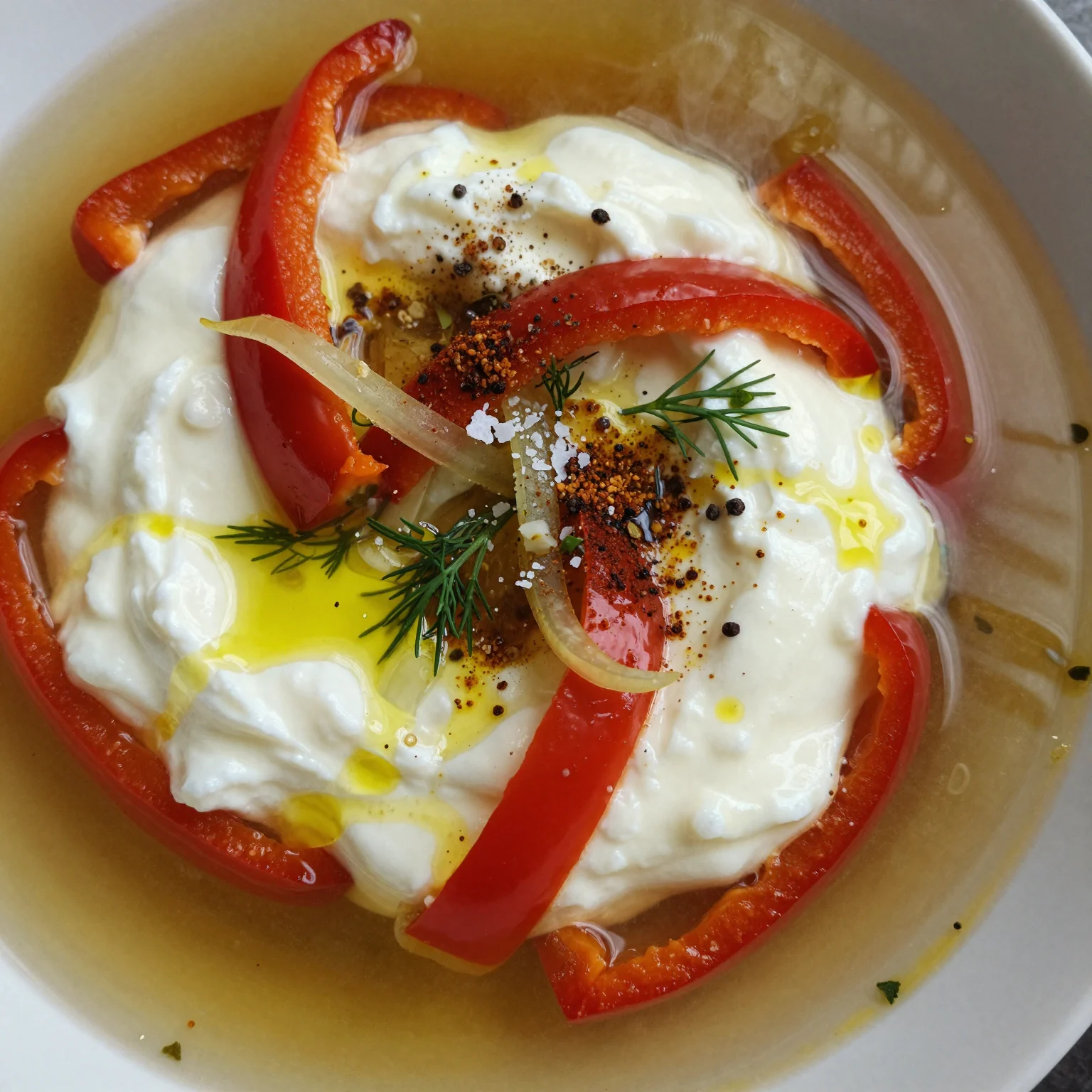
Roasted Pepper Yogurt Soup
A comforting yet refreshing Roasted Pepper Yogurt Soup made with roasted red bell peppers and Greek yogurt, delivering a smoky, tangy, and slightly sweet flavor profile.
Ingredients
Method
- Preheat your oven to 450°F. Place whole bell peppers on a baking sheet. Roast for 25-30 minutes, turning occasionally, until skins blacken and blister. Transfer roasted peppers to a bowl and cover with plastic wrap. Let them steam for 15 minutes.
- Once cooled, peel away the charred skin, remove stems and seeds, and roughly chop the flesh.
- Heat olive oil in a large pot over medium heat. Add chopped onion and cook for 5 minutes until softened. Add minced garlic, cumin, and smoked paprika, stirring for one minute until fragrant.
- Add chopped roasted peppers to the pot and pour in vegetable broth. Bring to a gentle simmer and cook for 10 minutes.
- Remove pot from heat and use an immersion blender to puree until smooth. Alternatively, transfer to a regular blender in batches.
- Return soup to low heat and whisk in Greek yogurt gradually, stirring constantly. Add lemon juice, taste, and adjust seasonings.
Notes
Ensure to roast the peppers well for smoky depth. Temper the yogurt before adding to prevent curdling. Never boil the soup after adding yogurt.